Michael
Dunn.

Work
Expanding design delivery through a self-service framework
The challenge
Arguably one of the most significant and complex operational challenges of my career. The central design team was a bottleneck — handling a high volume of low-complexity requests that consumed resource better spent on strategic and high-value work. The business needed to move from centralised delivery to a model where teams could produce on-brand content independently, without sacrificing quality or consistency.
What I did
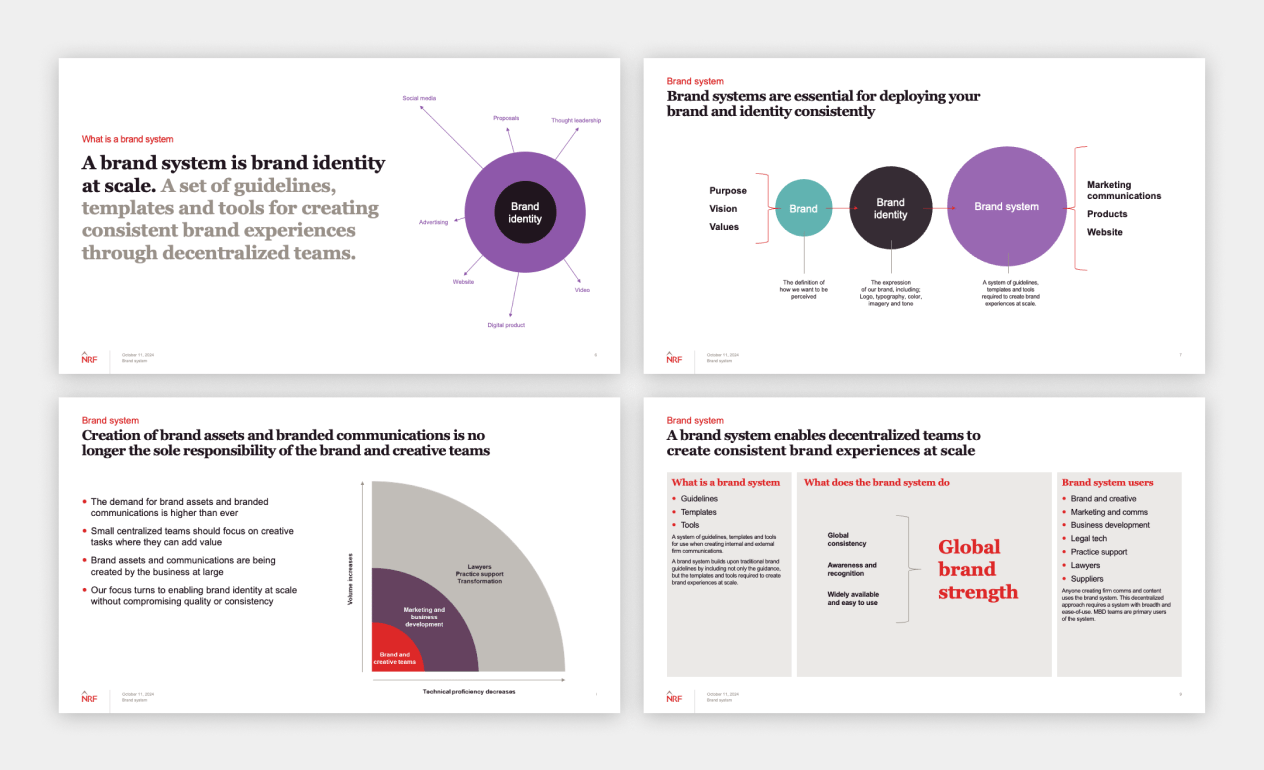
I led this transformation from initial recommendation through to full implementation. The project required making a compelling business case to senior stakeholders, securing budget and sign-off, selecting and procuring the right platform, designing the brand system and template ecosystem that would underpin it, and then training and enabling teams globally to use it.
This is a multi-faceted project that directly supports design strategy by empowering and enabling others to do more themselves.
What I delivered
- Business case for self-service model — approved at senior level
- Platform selection and procurement — evaluated and onboarded tooling
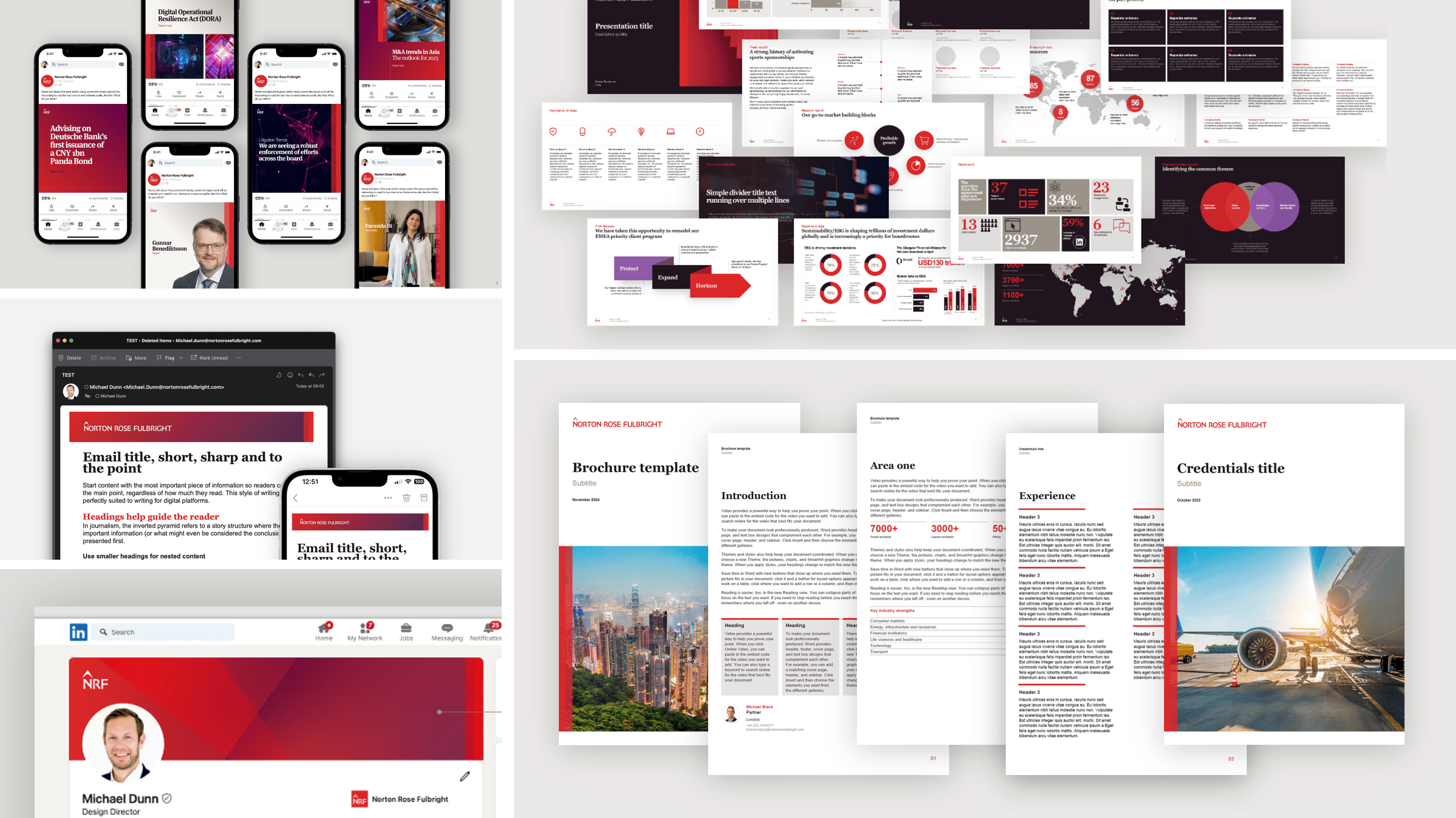
- Brand system and template library — built for self-service use
- Governance framework — ensuring quality and brand compliance at scale
- Training programme — enabling teams globally to produce on-brand content
- Notable output: enhanced proposals and presentation templates, now used globally across the firm
The outcome
The shift to self-service reduced low-complexity design requests to the central team by 60%, freeing up resource for higher-value strategic work. Visual presentation and consistency improved significantly across the global firm.
Results
- −60% reduction in low-complexity design requests
- Improved visual consistency across the global firm
- Central design team refocused on strategic, high-value work
Discipline
Creative ops
My role
Strategy
Operating model design
Training
Adoption
Practices
Operating model design
Self-service enablement
Vendor management
Change management
Skills
Business case development
Strategic planning
Platform procurement
Governance frameworks
Impact
60% reduction in low-complexity design requests
Brand and creative teams focused on strategic work
Brand identity
Rebranding newly combined firm Norton Rose Fulbright#RiskReady — McLaren Racing partnership activationGlobal brand advertising — top 3 global legal brandDesign systems
Office design system — PowerPoint & Word at global scaleModernising website visual design and experience© Michael Dunn — 2026
Work
Expanding design delivery through a self-service framework
The challenge
Arguably one of the most significant and complex operational challenges of my career. The central design team was a bottleneck — handling a high volume of low-complexity requests that consumed resource better spent on strategic and high-value work. The business needed to move from centralised delivery to a model where teams could produce on-brand content independently, without sacrificing quality or consistency.
What I did
I led this transformation from initial recommendation through to full implementation. The project required making a compelling business case to senior stakeholders, securing budget and sign-off, selecting and procuring the right platform, designing the brand system and template ecosystem that would underpin it, and then training and enabling teams globally to use it.
This is a multi-faceted project that directly supports design strategy by empowering and enabling others to do more themselves.
What I delivered
- Business case for self-service model — approved at senior level
- Platform selection and procurement — evaluated and onboarded tooling
- Brand system and template library — built for self-service use
- Governance framework — ensuring quality and brand compliance at scale
- Training programme — enabling teams globally to produce on-brand content
- Notable output: enhanced proposals and presentation templates, now used globally across the firm
The outcome
The shift to self-service reduced low-complexity design requests to the central team by 60%, freeing up resource for higher-value strategic work. Visual presentation and consistency improved significantly across the global firm.
Results
- −60% reduction in low-complexity design requests
- Improved visual consistency across the global firm
- Central design team refocused on strategic, high-value work
Discipline
Creative ops
My role
Strategy
Operating model design
Training
Adoption
Practices
Operating model design
Self-service enablement
Vendor management
Change management
Skills
Business case development
Strategic planning
Platform procurement
Governance frameworks
Impact
60% reduction in low-complexity design requests
Brand and creative teams focused on strategic work
Brand identity
Rebranding newly combined firm Norton Rose Fulbright#RiskReady — McLaren Racing partnership activationGlobal brand advertising — top 3 global legal brandDesign systems
Office design system — PowerPoint & Word at global scaleModernising website visual design and experience© Michael Dunn — 2026
Work
Expanding design delivery through a self-service framework
The challenge
Arguably one of the most significant and complex operational challenges of my career. The central design team was a bottleneck — handling a high volume of low-complexity requests that consumed resource better spent on strategic and high-value work. The business needed to move from centralised delivery to a model where teams could produce on-brand content independently, without sacrificing quality or consistency.
What I did
I led this transformation from initial recommendation through to full implementation. The project required making a compelling business case to senior stakeholders, securing budget and sign-off, selecting and procuring the right platform, designing the brand system and template ecosystem that would underpin it, and then training and enabling teams globally to use it.
This is a multi-faceted project that directly supports design strategy by empowering and enabling others to do more themselves.
What I delivered
- Business case for self-service model — approved at senior level
- Platform selection and procurement — evaluated and onboarded tooling
- Brand system and template library — built for self-service use
- Governance framework — ensuring quality and brand compliance at scale
- Training programme — enabling teams globally to produce on-brand content
- Notable output: enhanced proposals and presentation templates, now used globally across the firm
The outcome
The shift to self-service reduced low-complexity design requests to the central team by 60%, freeing up resource for higher-value strategic work. Visual presentation and consistency improved significantly across the global firm.
Results
- −60% reduction in low-complexity design requests
- Improved visual consistency across the global firm
- Central design team refocused on strategic, high-value work
Discipline
Creative ops
My role
Strategy
Operating model design
Training
Adoption
Practices
Operating model design
Self-service enablement
Vendor management
Change management
Skills
Business case development
Strategic planning
Platform procurement
Governance frameworks
Impact
60% reduction in low-complexity design requests
Brand and creative teams focused on strategic work
Brand identity
Rebranding newly combined firm Norton Rose Fulbright#RiskReady — McLaren Racing partnership activationGlobal brand advertising — top 3 global legal brandDesign systems
Office design system — PowerPoint & Word at global scaleModernising website visual design and experience© Michael Dunn — 2026